



Central Kalimantan Province
A Comprehensive Look at Central Kalimantan Province
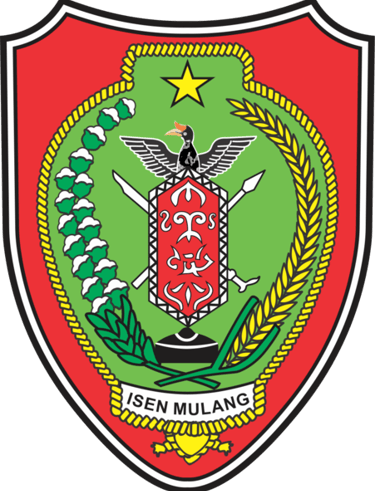
Central Kalimantan Province (Kalimantan Tengah): The Land of Rattan and the Orangutan
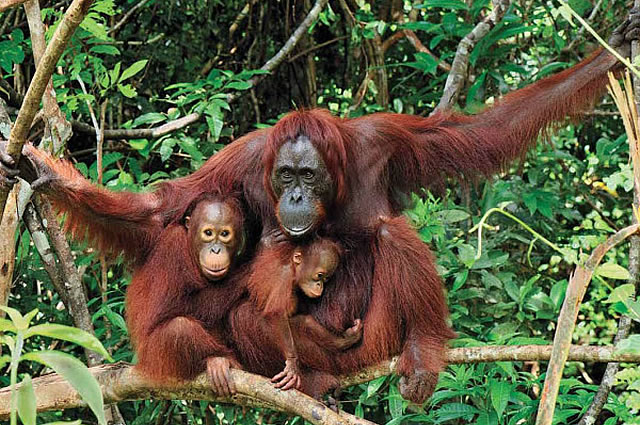
Central Kalimantan (Kalteng) is the largest province by land area in Kalimantan, characterized by vast, dense tropical peat swamp forests and an intricate network of mighty rivers, most notably the Kahayan and Barito. It is the cultural heartland of many indigenous Dayak sub-tribes and a critical global sanctuary for the endangered Orangutan.
🏛️Capital City and Geographical Conditions
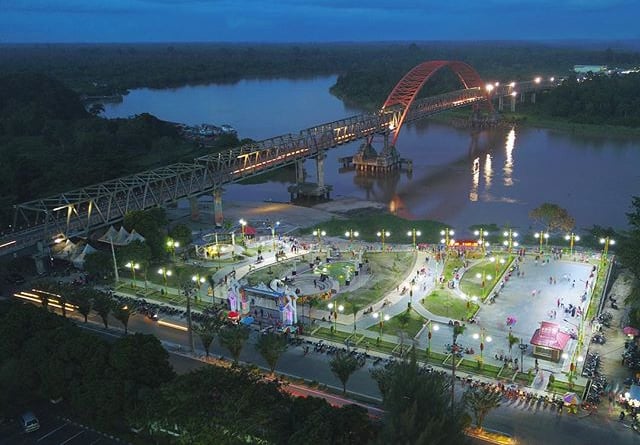
Capital City: Palangkaraya. The city was originally designed by Indonesia's first president, Sukarno, as a potential future national capital due to its central location.
Geographical Conditions: Kalteng is largely dominated by flat to rolling terrain.
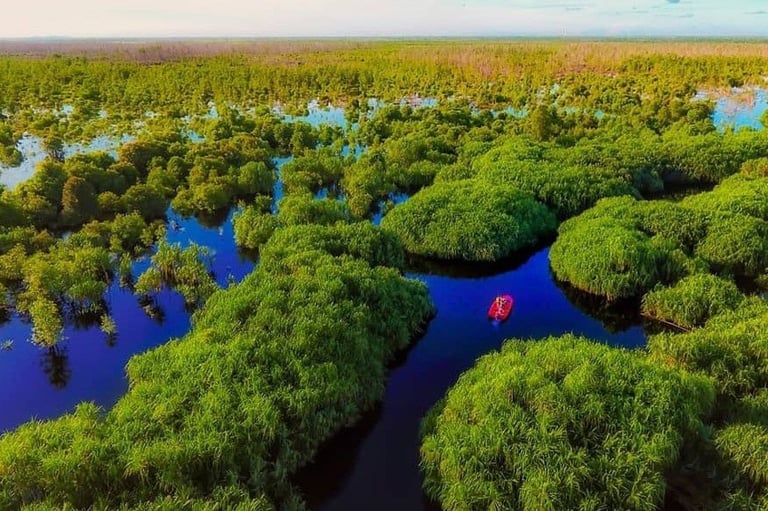
Peat Swamp Forests: A significant portion of the south is covered by peatlands, which are highly vulnerable to fire but are crucial for carbon storage and habitat conservation.
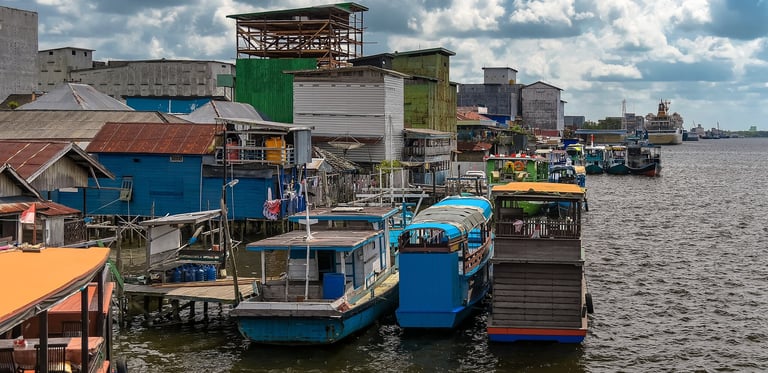
Rivers: The province is heavily reliant on its major rivers (Kahayan, Kapuas, Barito) for transport, commerce, and settlement.
Highlands: The northern area borders the Schwaner Mountain Range.
Climate: Equatorial tropical climate, with high rainfall and consistent heat throughout the year.
👥Demographics and Customs
Population: The population of Central Kalimantan is approximately 2.7 million people. It is one of Indonesia's least densely populated provinces.
Ethnic Groups: The indigenous majority are various sub-groups of the Dayak people. Other groups include significant communities of Banjarese (from South Kalimantan, often involved in trade) and Javanese (through government transmigration programs).
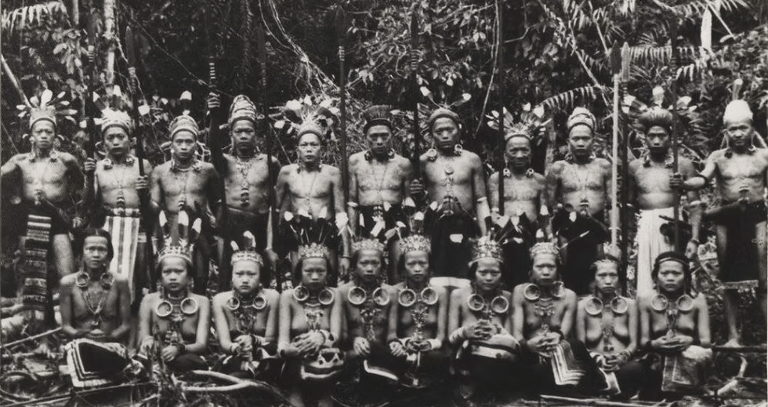
Customs (Adat Istiadat): Dayak culture is central.
Kaharingan: The original animistic religion of the Dayak people, which is now formally recognized as a form of Hindu Dharma, emphasizing respect for ancestors and nature.
Tiwah Ceremony: The most sacred and elaborate death ritual, traditionally held to send the souls of the deceased to the higher level of the afterlife.
Pancasila Adat: A code of customary law that governs social life, marriage, and dispute resolution.
📜History: Indigenous Roots and Modern Planning
Central Kalimantan's modern history is defined by its quest for regional identity and autonomy.
Dayak Heartland: The region has been the traditional territory of numerous Dayak groups (e.g., Ngaju, Ma'anyan, Ot Danum) for centuries, preserving unique spiritual beliefs and social structures.
Formation of the Province: Central Kalimantan was politically separated from South Kalimantan in 1958, largely driven by the desire of the Dayak communities to form their own administrative region and protect their distinct cultural identity.
The Planned Capital: Palangkaraya was selected by President Sukarno in the 1950s as a prospective future capital for the entire country, leading to its unique, planned layout, though it was never officially realized as the national capital.


🎨Culture and Traditional Arts
Central Kalimantan’s art is intrinsically linked to its spiritual beliefs and the raw materials of the forest.
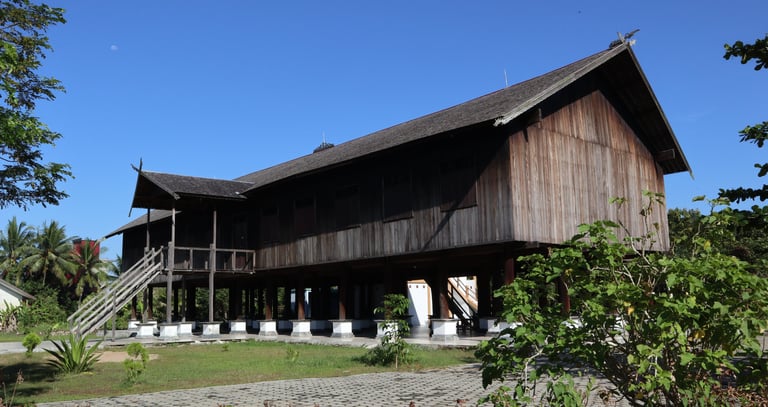
Rumah Betang: The traditional communal longhouse, symbolizing the collective spirit of the Dayak community.
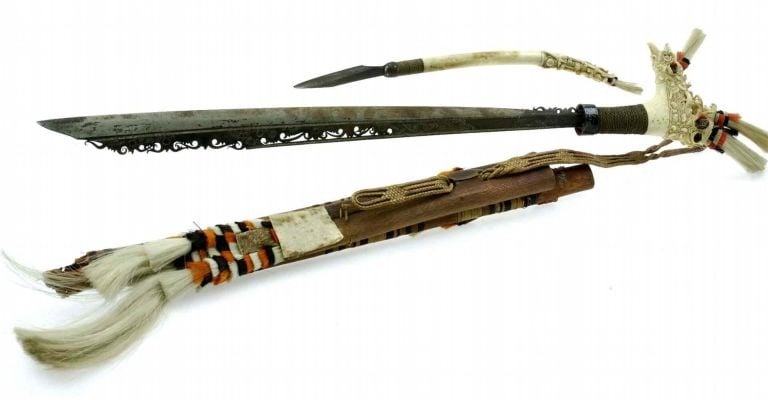
War Instruments: The Mandau (traditional sword) and Talawang (shield) are not just weapons but intricately carved ritual objects, featuring mythical figures and protective symbols.
Dayak Sculpture: Known for wooden statues called Sapundu (used in rituals) and vibrant, complex wood carvings.
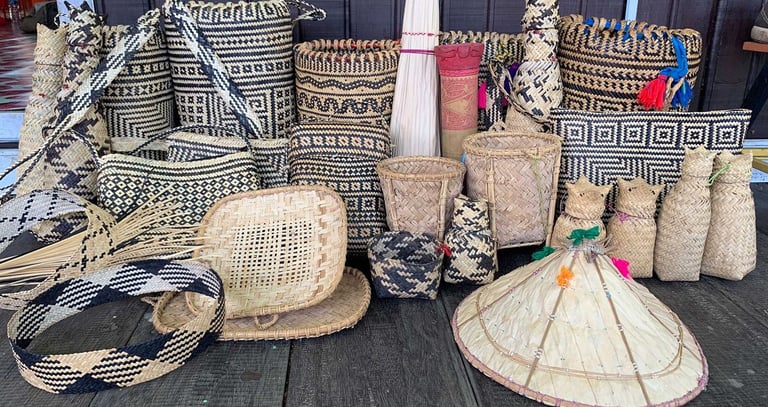
Woven Rattan: The skillful use of forest materials, particularly rattan, for weaving mats, baskets, and traditional garments.


Traditional Houses and Clothing of Central Kalimantan Province (Kalimantan Tengah)
Central Kalimantan is primarily inhabited by the Dayak people, particularly the Ngaju, Ot Danum, and Ma'anyan sub-tribes. The culture is strongly tied to the large rivers, the tropical rainforest, and the indigenous animistic belief system (Kaharingan), which deeply influences all aspects of their tradition.
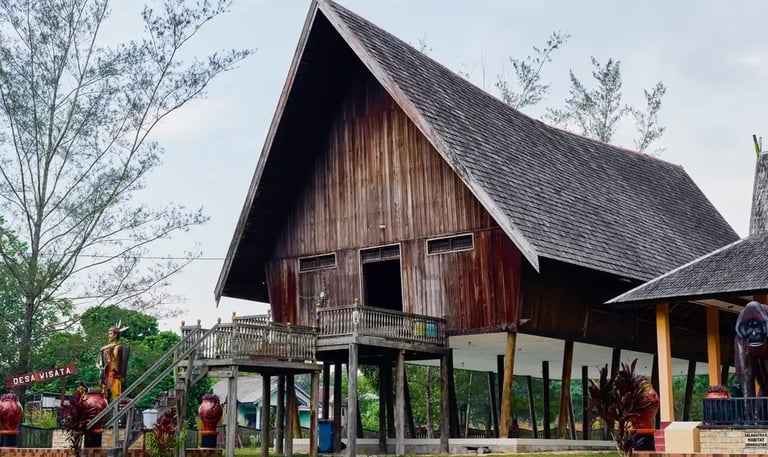
🏠Traditional House : Rumah Betang
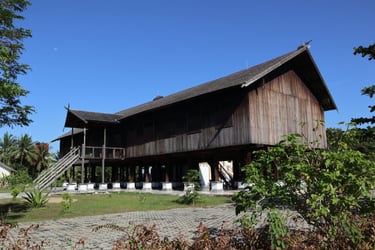
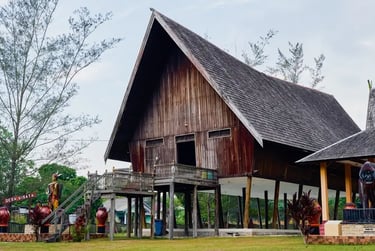
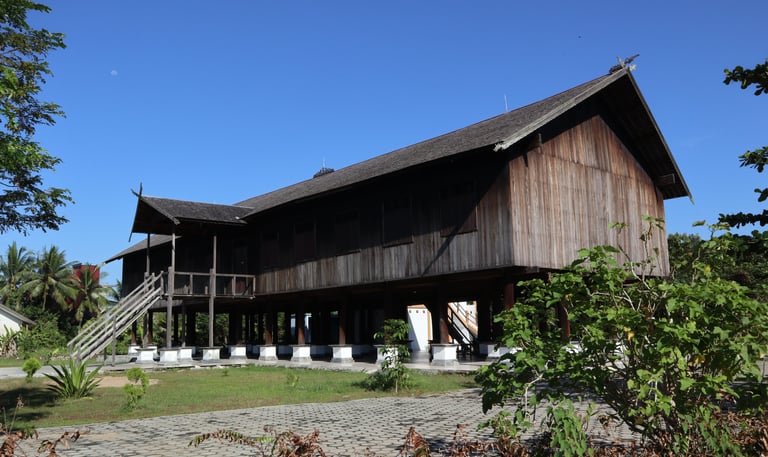
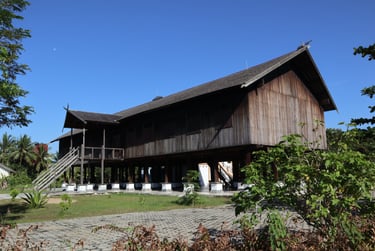
Rumah Betang (or Rumah Betang Longhouse) This is the iconic communal longhouse of the Dayak people in Central Kalimantan. It is a massive, elevated stilt house, sometimes extending over 150 meters in length, designed to house up to 100 people or multiple families (a single clan or entire village). Built on sturdy ironwood (ulin) posts, the house stands high above the ground to protect against floods and wild animals. The Rumah Betang symbolizes the collective nature of the Dayak community, with a single continuous room serving as the shared living and ceremonial area.
Architecture and Philosophy (Rumah Adat Dayak Ngaju)
Architecture The house is always built parallel to the river and oriented towards the sunrise. It represents the concept of unity and balance. It is divided into a communal teras (terrace) and inner rooms, reflecting the social structure where disputes are resolved and ceremonies are held collectively. The main hall is also used for traditional funeral rites (Tiwah).
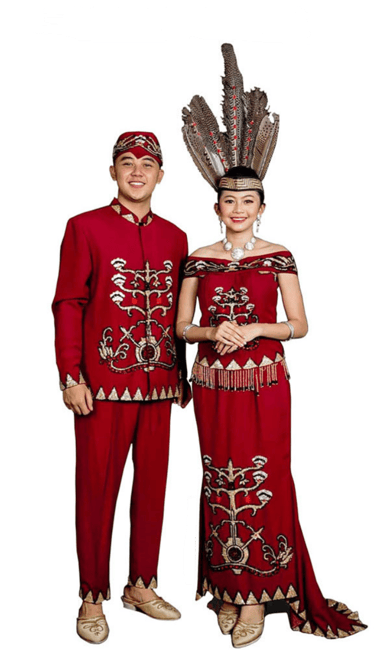
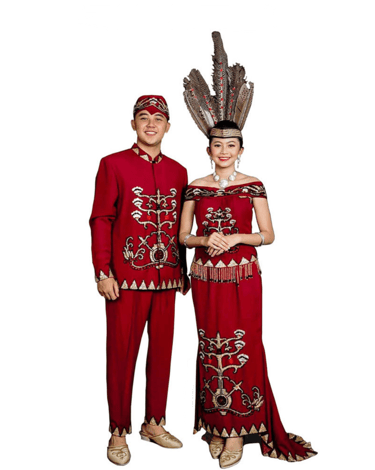
👘Traditional Clothing : Pakaian Adat Dayak
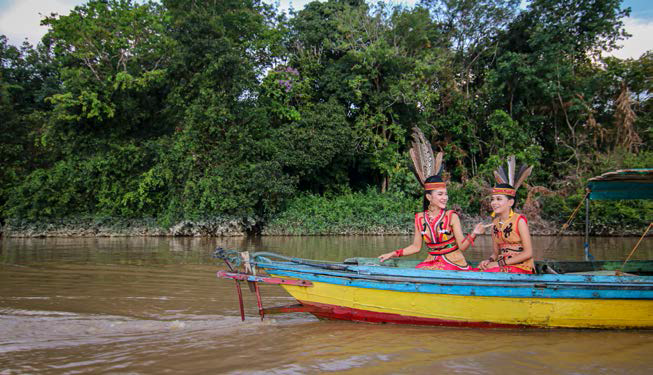
Pakaian Adat Dayak (Dayak Traditional Attire) The traditional attire is rich in natural materials and symbolic ornaments, reflecting the Dayak people's close relationship with the forest and ancestral spirits.
General Feature
Natural Materials and Beadwork The clothing is historically made from natural forest fibers, such as woven bark fiber (especially kapuo bark), and heavily decorated with colorful beads (a status symbol), animal teeth, bones, and feathers. The color scheme and motifs often relate to the wearer's sub-tribe and status, with black and red being common base colors.
Men's Attire (Baju Adat Laki-laki)
King Baba and Cawat Men wear a simple Cawat (loincloth), often with a vest or sleeveless jacket made of bark or rattan. The outfit is accessorized with heavy bead necklaces, rattan bracelets, and a Mandau (ceremonial sword) carried on the side. The head is adorned with a Lawung (headband) decorated with horns and feathers (usually from hornbills), signifying bravery and warrior status.
Women's Attire (Baju Adat Perempuan)
King Bibinge and Skirt Women wear a simple skirt or sarong and a sleeveless top, all made from bark fiber or woven rattan. The clothing is extensively embellished with beads and shells. A distinguishing feature is the use of ringlets or coils made of brass or rattan wrapped around their calves and ankles, which create a distinctive sound when walking and are considered marks of beauty and status.
🍲Distinctive Traditional Cuisine
The cuisine relies heavily on freshwater fish, forest produce, and traditional Dayak methods, often involving smoking or cooking in bamboo.
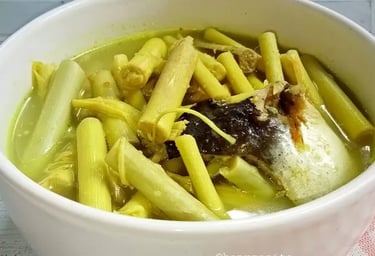
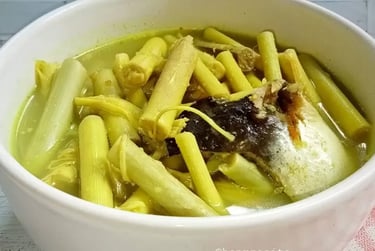
Juhu Singkah: A traditional Dayak soup featuring fish (often river catfish or patin) cooked with Umbut Rotan (young rattan shoots). The rattan adds a distinctive, slightly bitter, and crunchy element to the savory soup.
Kalumpe (Karungus): A dish made from pounded or finely mashed young leaves of the cassava plant, mixed and cooked with spices (like chili, garlic, and shallots) and sometimes smoked fish or terasi (shrimp paste).
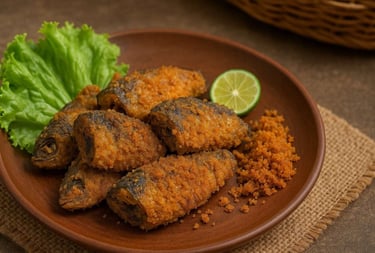
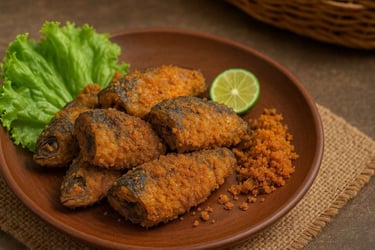
Wadi: A traditional Dayak method of preservation where meat or fish (often river fish like haruan or snakehead) is fermented with salt, rice, or palm sugar. The resulting product is then cooked (fried or grilled) and is extremely savory and tender.
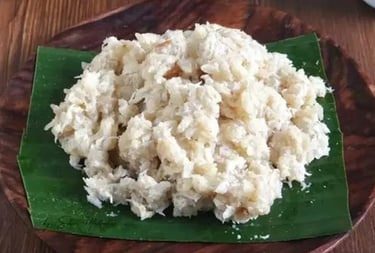
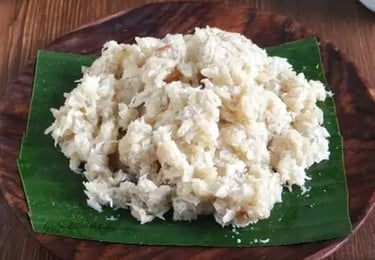
Kenta: A traditional Dayak breakfast or snack, made from half-cooked sticky rice that is pounded flat and then usually consumed with sugar or dried meat.


🗺️Famous Tourist Attractions
The province is a destination for eco-tourism and cultural immersion.
Tanjung Puting National Park: The most famous attraction, a world-renowned reserve and critical sanctuary for the Orangutan, accessible from Kumai/Pangkalan Bun. Visitors travel by Klotok (traditional river boat) to observe orangutans in their natural habitat and at feeding stations.
Sultan Kumai Mosque: A historical mosque in Kumai with distinct architectural elements that blend local Malay and Banjarese styles.
Taman Nasional Sebangau (Sebangau National Park): A large, protected area of peat swamp forest, another vital habitat for Orangutans and other wildlife, accessible by river.
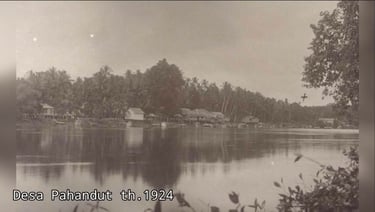
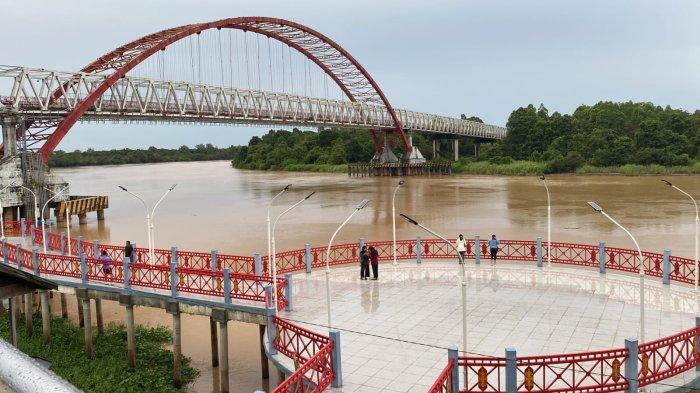
Kahayan River and Traditional Villages: Taking a motorized ces boat tour along the Kahayan River provides a glimpse into the Dayak settlements (Kampung) and daily life along the waterfront.
Tugu Soekarno (Sukarno Monument): Located in Palangkaraya, marking the spot where the founding father laid the foundation stone for the potential national capital.
✈️Transportation Infrastructure
Central Kalimantan’s infrastructure relies on air, road, and crucially, its vast river network.
Airport (Bandar Udara):
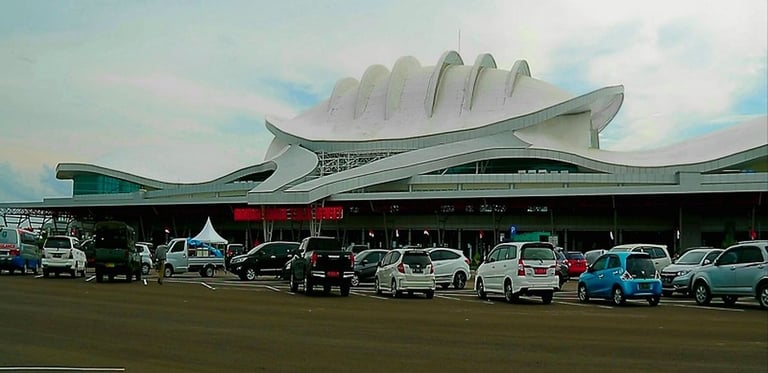
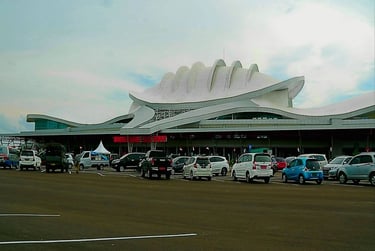
Tjilik Riwut Airport (PKY): Located in Palangkaraya, serving domestic flights to Jakarta, Surabaya, and other regional cities.
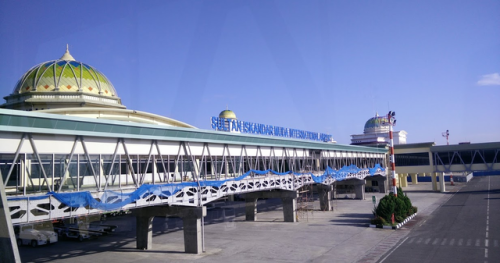
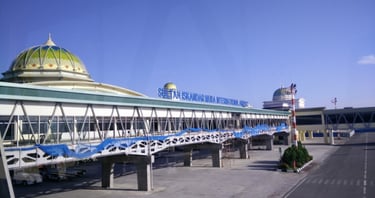
Iskandar Airport (PKN): Located in Pangkalan Bun, essential for accessing the Tanjung Puting National Park, serving domestic flights.
Port (Pelabuhan):
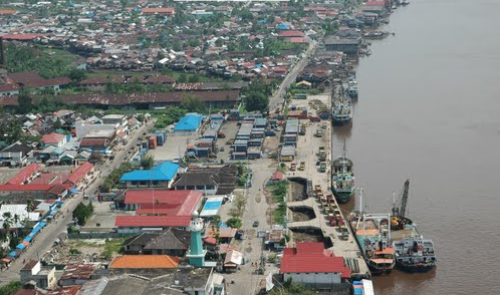
Sampit Port: The major seaport handling general cargo, containers, and, most importantly, timber and palm oil exports.
Kumai Port: The primary port for passenger and cargo ferries connecting Central Kalimantan to Java Island (Semarang and Surabaya). It is also the access point for the Tanjung Puting National Park.
River Ports: Small river ports (Pelabuhan Sungai) are numerous and constitute the main internal transport network for logging, mining, and remote community access.
Railroad (Stasiun Kereta Api):
Central Kalimantan Province does not have any active railway network or passenger train stations. Transportation relies entirely on road networks (often challenging due to terrain and peatlands) and the extensive river systems.
Central Kalimantan is a province of profound ecological and cultural significance. It is a land dominated by the great rivers and the towering trees of the Bornean rainforest, serving as the last bastion for the Orangutan and the enduring spirit of the Dayak people. From the sacred rituals of the Tiwah Ceremony to the essential bitterness of Juhu Singkah, Kalteng offers a rugged, unforgettable journey into Indonesia's green heart—a place dedicated to preserving the invaluable wealth of its nature and its ancient traditions.
Follow us to explore Indonesia with expert travel guidance
©PT.Sinar Pesona Travelindo 2025. All rights reserved.