


A Complete and Comprehensive Guide: How to Plan Your Vacation to Indonesia
🛂Visa and Immigration: Do I Need a Visa to Visit Indonesia?
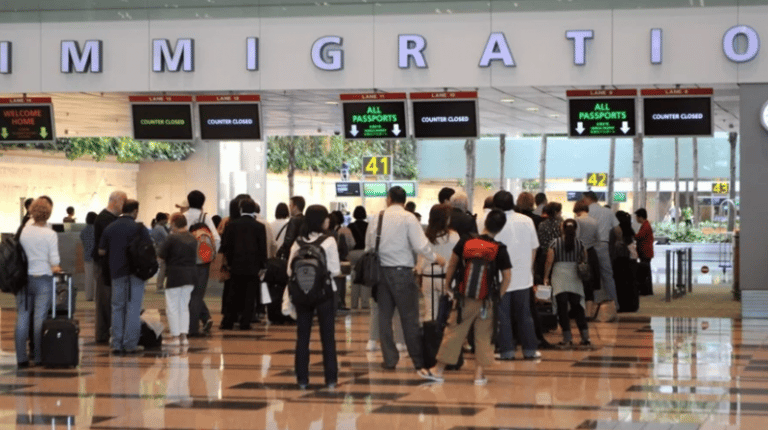
Welcome to Indonesia! As a International traveler, the process of entering Indonesia—particularly concerning visa and immigration—is generally straightforward. However, understanding the current regulations is crucial to ensure a smooth arrival at your international airport of entry.
1. Visa Status for International Travelers
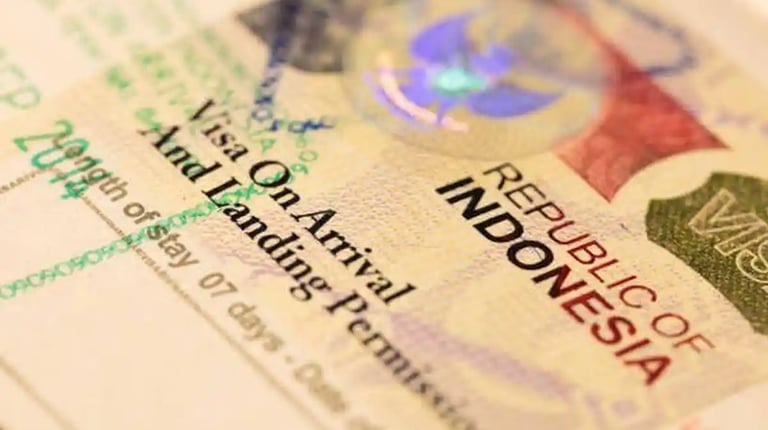
Good news! Travelers from the majority of all countries have easy access to Indonesia for tourism purposes. There are two primary options you will encounter: the Visa on Arrival (VOA) and, in limited cases, the Visa Exemption.
Option A: Visa on Arrival (VOA) – The Standard Choice
Currently, nationals from almost all around the world, are eligible for the Visa on Arrival (VOA).
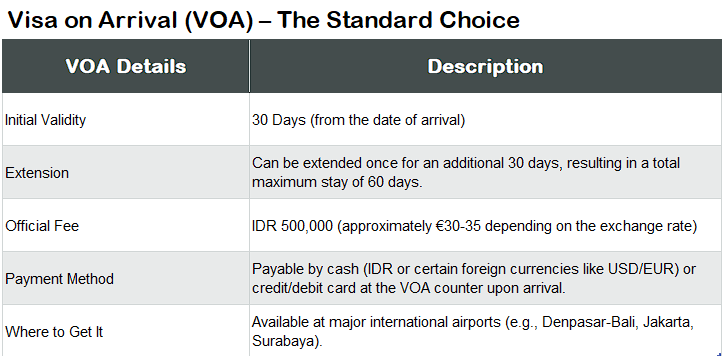
💡Pro Tip from TripTravelindo: We highly recommend obtaining the e-VOA (Electronic Visa on Arrival) prior to your departure. By applying and paying for your e-VOA online, you skip the physical VOA queue upon landing, significantly speeding up your immigration process.
Option B: Visa Exemption (Subject to Change)
While some European countries were previously eligible for a 30-day non-extendable Visa Exemption, this policy has undergone frequent changes, especially post-pandemic.
Important: The VOA remains the most reliable and common route for International tourist. Always verify the current policy on the official Indonesian Immigration website shortly before booking your flight.
2. Essential Documents to Prepare for Arrival
Please ensure these critical documents are easily accessible in your carry-on luggage to present to the immigration officer:
Passport: Must be valid for at least 6 months from your date of arrival in Indonesia.
Return or Onward Ticket: Proof that you will leave Indonesia (to your home country or next destination) within the maximum allowed stay (60 days for an extended VOA).
VOA Payment Proof: If you have secured an e-VOA, keep your printed or digital proof handy.
Electronic Customs Declaration (E-CD): Since 2022, all travelers must submit an E-CD. You must complete this online form within 72 hours (3 days) before your arrival via the official customs website or application.
3. VOA Extension Process (If Staying Over 30 Days)
If your trip includes a long-stay exploration of Java, Bali, Lombok, and NTT for up to 60 days, you must arrange for an extension.
When to Apply: The application must be submitted to a local Immigration office before your initial 30 days expire.
The Process: This usually takes 3 to 5 working days and requires a physical visit for photo and fingerprint collection.
Our Recommendation: If you plan to stay beyond 30 days, let us know! TripTravelindo can advise you on reputable local agents in Bali or Java to assist with your visa extension, ensuring your extended holiday is hassle-free.
By understanding the VOA options and preparing your documents, your entry into Indonesia will be seamless.
Thinking about a trip longer than 30 days? We specialize in comprehensive long-stay packages that cover the in-depth exploration of Java, Bali, Lombok, and the stunning remote islands of NTT.
🏥Health and Insurance: Recommended Vaccinations and the Importance of Travel Insurance
A successful, enjoyable trip begins with good preparation, especially concerning your health and safety. Indonesia offers incredible diversity, but preparation is key. Here is what travelers from all around the world should consider regarding medical preparedness for their adventure with TripTravelindo.



1. Travel Insurance: Non-Negotiable Protection
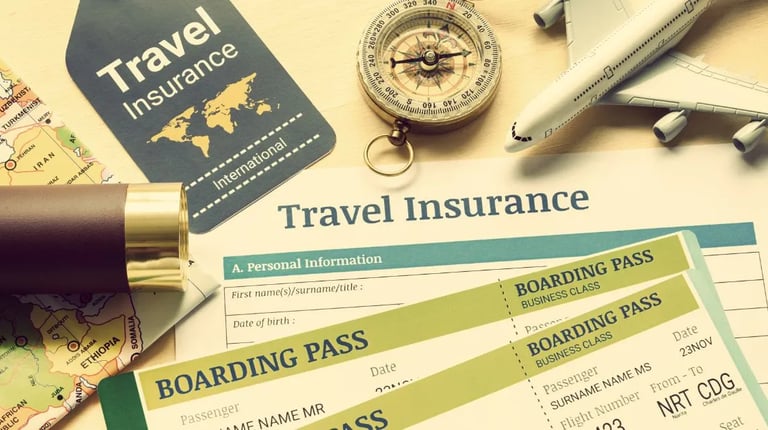
Travel insurance is the single most important preparation step we recommend for all our clients, especially those traveling from all around the world to Southeast Asia.
Why Travel Insurance is Essential:
Medical Emergencies: While major cities (Jakarta, Surabaya, Denpasar) have excellent hospitals, medical costs for emergencies, hospitalization, or surgery can be substantial. Comprehensive insurance ensures you are covered.
Emergency Evacuation: For adventurous trips to remote areas like the islands of NTB & NTT or trekking in Java (Bromo, Ijen), rapid medical evacuation (e.g., helicopter transfer) to a facility in Bali or Singapore may be necessary. Without insurance, this cost is prohibitive.
Non-Medical Coverage: Most policies also cover unforeseen events that could disrupt your trip:
Trip Cancellation or Interruption (due to family emergency or flight delays).
Lost, Stolen, or Delayed Luggage.
🛡️TripTravelindo Recommends: When choosing a policy, ensure it explicitly covers "adventure activities" if your package includes trekking, diving, or significant boat travel (especially for Labuan Bajo/Komodo). Confirm the policy's maximum medical coverage limit is adequate for international care.
2. Recommended Vaccinations
We always advise consulting your General Practitioner (GP) or a specialist travel health clinic in your home country (Italy, UK, Germany, etc.) at least 4 to 6 weeks before departure. They can provide the most accurate advice based on your medical history and the specific remote areas you plan to visit.
A. Routine Vaccinations (Ensure They Are Up-to-Date)
Make sure you are protected against diseases common worldwide:
MMR: Measles, Mumps, Rubella.
DTP: Diphtheria, Tetanus, and Polio.
Influenza (Flu): Especially if traveling during peak flu seasons.
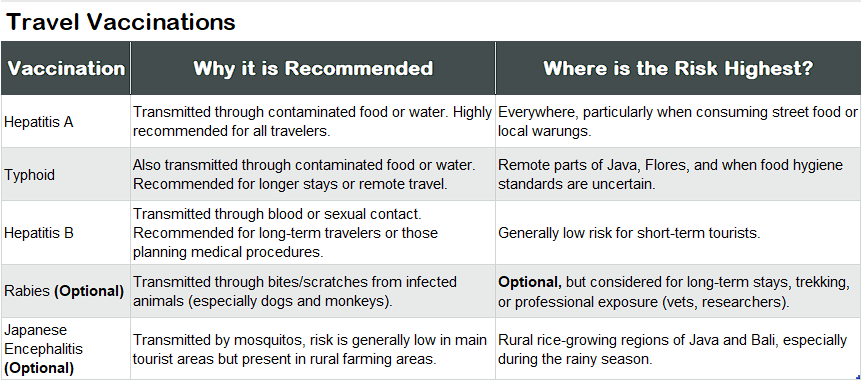
B. Commonly Recommended Travel Vaccinations for Indonesia
Depending on the length and nature of your stay (especially trips extending beyond standard tourist zones), these are commonly advised:
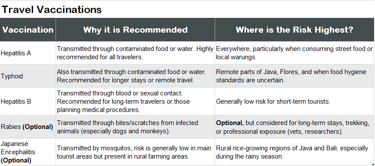
3. Malaria and Mosquito-Borne Illnesses
While there is minimal to no malaria risk in the main tourist hubs of Bali, Java (major cities), and Gili Islands (Lombok), the risk increases dramatically in other regions, most notably:
High Risk: Remote areas of NTT (e.g., Sumba, Flores outside of Labuan Bajo town center).
Mosquito-Borne: Dengue Fever is a year-round risk across all of Indonesia, including Bali. There is no vaccine for Dengue.
How to Stay Protected:
Repellent: Use insect repellent containing DEET (20% or higher).
Clothing: Wear long sleeves and pants, especially at dawn and dusk.
Prophylaxis (for high-risk areas): If your itinerary includes remote parts of NTT, consult your doctor about taking anti-malarial medication (prophylaxis).
By prioritizing comprehensive travel insurance and appropriate vaccinations, you are taking the best steps to ensure your journey through the magnificent landscapes of Java, Bali, Lombok, and NTT is both unforgettable and safe.
Ready to secure your trip?
➡️[Explore TripTravelindo’s Exclusive Insured Tour Packages]
☀️Best Time to Visit: Understanding the Wet and Dry Seasons in Indonesia
Choosing the right time to visit Indonesia can significantly impact your experience, especially when planning multi-island itineraries that include trekking in Java, beach holidays in Bali and Lombok, or boat tours in NTT. Unlike temperate zones in America & Europe, Indonesia experiences two main seasons: the Dry Season and the Wet Season.


1. The Dry Season (High Season): April to October
This period is generally considered the best time to travel across most of Indonesia, offering ideal weather conditions.
What to Expect:
Weather: Sunny skies, low humidity, and minimal rainfall, making it perfect for outdoor activities.
Ideal Activities: This is the best window for mountain trekking (Bromo, Ijen, Rinjani), island hopping (Komodo, Gili Islands), and diving/snorkeling in areas like Bali, Lombok, and Labuan Bajo.
Crowds and Pricing: Since this is the High Season (especially July and August), expect higher prices for flights and accommodation, and more crowded major tourist sites.
Crucial Timing for NTT: If your trip focuses on remote destinations like the Komodo National Park and the islands of Sumba and Flores, the Dry Season guarantees the calmest seas and clearest visibility.
2. The Wet Season (Low Season): November to March
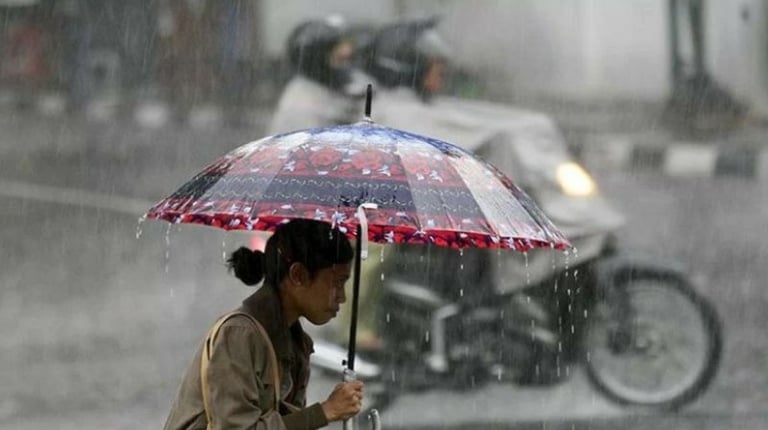
The period from November to March is characterized by higher humidity and frequent, often heavy, rainfall.
What to Expect:
Rainfall: Rain typically occurs in heavy, short bursts in the late afternoon or evening, leaving the mornings clear. However, full-day rain events can occur, particularly in January and February.
Humidity: Expect higher humidity levels, especially in coastal areas.
Pricing and Crowds: This is the Low Season (excluding the Christmas/New Year holidays). You will benefit from significantly lower prices and far fewer crowds, offering a more tranquil experience.
Considerations:
Sea Conditions: Seas can be rougher, which may affect Island Hopping itineraries in areas like Nusa Penida, the Gili Islands, and parts of NTT.
Trekking: Trails can be slippery, and visibility may be reduced, making some mountain treks challenging.
📝TripTravelindo’s Advice: Don't completely discount the Wet Season! If you prioritize cultural experiences (in Yogyakarta or Central Java) or spa and relaxation (in Bali), the lower prices and reduced crowds make it a beautiful time to visit.
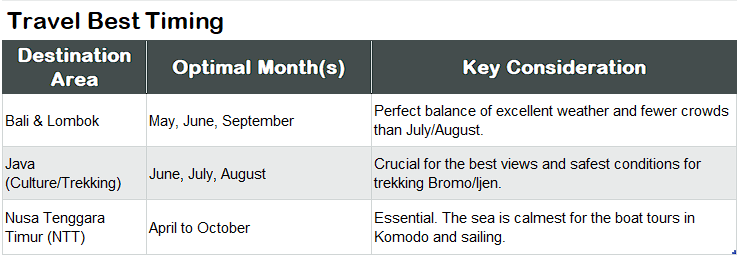
3. Best Timing for Your Core Destinations
While the general rule applies, specific destinations can have micro-climates or crucial timing needs:
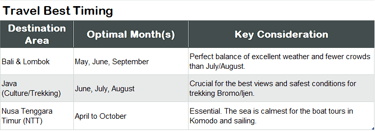
4. Understanding Shoulder Season (April and October)
The shoulder months of April and October often provide the best of both worlds: good weather (though occasional rain showers may occur) combined with Shoulder Season pricing, making it an excellent value time to book your trip.
Planning your journey during the Dry Season ensures the widest range of activities are safely available, especially the magnificent boat tours in NTT.
Ready to lock in the dates for your Indonesian adventure?
➡️[Check Availability for TripTravelindo’s Tour Packages during the Dry Season]
💰Currency and Finance: Your Guide to Rupiah (IDR), Exchange Tips, and Using Cards
Navigating currency exchange and local payment methods is essential for a stress-free holiday in Indonesia. The local currency is the Indonesian Rupiah (IDR). Understanding how to manage your money will ensure you have seamless transactions throughout your journey, from the bustling markets of Java to the remote islands of NTT.


1. The Indonesian Rupiah (IDR) at a Glance
Key Facts:
Currency Code: IDR
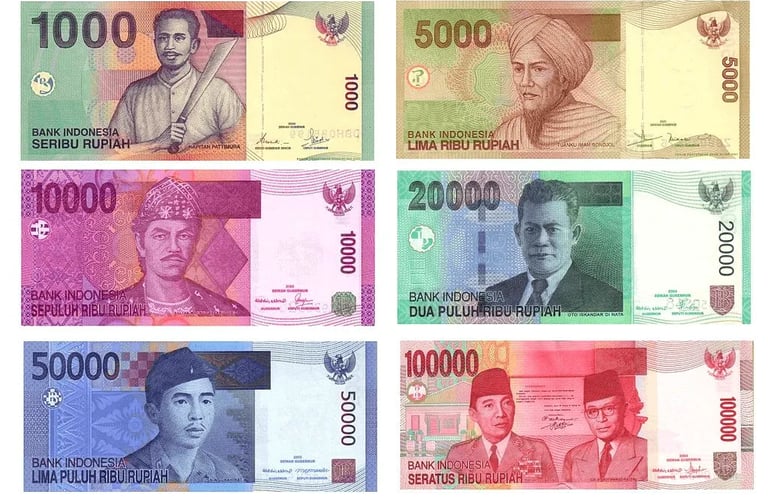
Denominations: Banknotes are commonly issued in IDR 1,000, 2,000, 5,000, 10,000, 20,000, 50,000, and 100,000.
Tip: You will mostly be dealing with the IDR 50,000 and IDR 100,000 notes. Be mindful of the number of zeros when paying, as it is easy to mistake a 10,000 note for a 100,000 note due to their similar color palette.
2. Currency Exchange: Where and How to Get IDR
A. Exchanging Cash (USD, EUR, GBP, CHF)
Avoid Airport Exchange Booths: While convenient, the exchange rates offered at major international airports are typically lower than those found elsewhere. Change only a small amount here (e.g., €50) for immediate needs.
Authorized Money Changers: The best rates are usually found at reputable, authorized money changers in tourist centers (Kuta, Seminyak, Ubud in Bali; major malls in Jakarta).
Safety Tip: Always use money changers that display "PVA Berizin" (Authorized). Count your money immediately after the transaction, in front of the teller, before leaving the counter.
Condition of Notes: Indonesian money changers are strict. Bring clean, crisp banknotes (EUR, GBP, USD, CHF) that are free of tears, folds, or markings, as damaged notes may be refused or exchanged at a lower rate.
B. Automated Teller Machines (ATMs)
Using your European bank card (Visa/Mastercard) at an ATM is often the most convenient method, offering rates close to the interbank rate.
Recommended ATM Networks: Look for ATMs from major Indonesian banks like BCA, BNI, Mandiri, and BRI. BCA is widely considered the most reliable.
Withdrawal Limits: ATMs typically dispense a maximum of IDR 1.5 million to IDR 3 million per transaction. You may need to perform multiple withdrawals.
Fees: Be aware of two potential fees: the fee charged by the Indonesian bank (usually small) and the international withdrawal fee charged by your home bank.
🚨Security Precaution: Always use ATMs located inside a bank branch, a major convenience store, or a shopping mall lobby to minimize the risk of fraud. Cover the keypad when entering your PIN.
3. Using Credit and Debit Cards
A. Where Cards are Accepted
Widely Accepted: Major Visa and Mastercard are accepted at all large hotels, international restaurants, high-end shops, and reliable tour operators.
Limited Acceptance: Cards are rarely accepted at local warungs (small eateries), small shops, traditional markets, and for local transportation (taxis, motorbikes). Always carry cash for daily expenses.
B. Digital Payment and E-Wallets
In major cities and Bali, digital e-wallets like GoPay and OVO are extremely popular for services like ride-hailing (Gojek/Grab) and food delivery. While you may not use them directly, having cash for these services is essential.
A mixture of cash and card is the best strategy: rely on cards for major purchases and ATMs for daily cash needs, while ensuring you carry enough smaller Rupiah notes for markets and tips.
Planning your budget is the first step to a worry-free trip!
➡️[Discover TripTravelindo's Tour Packages with Clear Cost Breakdown and Inclusions]
🎒Packing Tips: What to Bring and What to Leave Behind
Preparing your luggage for an Indonesian adventure requires a shift from four season climate packing. Indonesia is tropical, meaning humidity and heat are constant factors. Smart packing will significantly enhance your comfort, whether you are exploring temples in Java or relaxing on the beaches of Lombok.




1. Clothing Essentials: Focus on Comfort and Respect
The key rule for clothing is lightweight, breathable, and quick-drying fabrics.
Must-Pack Items:
Lightweight Fabric: Linen, cotton, or synthetic athletic wear (especially crucial for trekking Bromo or Ijen).
Modest Attire: While beach areas are relaxed, when visiting temples (like Borobudur, Prambanan, or Balinese temples) or government buildings, shoulders and knees must be covered. Pack:
Sarongs (can be easily bought locally).
Lightweight scarves/shawls.
Swimwear: Ample swimwear for Bali, Lombok, and NTT island hopping!
Rain Gear: A lightweight, foldable rain jacket or poncho is essential, particularly if traveling during the shoulder or wet seasons (November–March).
What to Leave Behind:
Heavy Denim or Wool: These fabrics take forever to dry in high humidity.
Excess Formal Wear: Unless specifically required for a very high-end event, formal attire is generally unnecessary.
2. Footwear: Comfort Over Fashion
Indonesia requires versatile footwear that can handle wet conditions, heat, and uneven terrain.
Sandals/Flip-flops: Essential for quick transitions and beach life.
Sturdy Walking Shoes: Comfortable, broken-in shoes or lightweight hiking boots are necessary for temple tours in Yogyakarta and trekking excursions in Java or Lombok (Rinjani).
Water Shoes: Useful for navigating rocky beaches or coral entrances during snorkeling/diving (especially in NTT).
3. Technology and Connectivity
While Indonesia is well-connected, a few items are critical for smooth operation of your devices.
Universal Adapter: Indonesia uses the Type C and F plug standards (the two-pin round plug common in Europe). While many European plugs fit, a universal adapter is safest.
Power Bank: In remote areas (like parts of Flores or during a Live on Board trip to Komodo), power outlets can be scarce. A fully charged power bank is your lifeline.
Unlocked Phone: Crucial if you plan to buy a local SIM card upon arrival (highly recommended for data connectivity—refer back to our SIM Card guide).
4. Health and Personal Care
Despite local availability, bringing these items from home ensures you get what you need immediately.
High-SPF Sunscreen: The equatorial sun is intense. SPF 50+ is recommended.
Insect Repellent (with DEET): Your primary defense against Dengue and Malaria (especially outside main tourist hubs).
Basic Medical Kit: Include motion sickness medication (for boat trips to the Gili Islands or Nusa Penida), anti-diarrhea tablets, blister plasters, and pain relievers.
Personal Medication: Bring an adequate supply of any prescription medication, along with a copy of the prescription/doctor's note for customs purposes.
✈️TripTravelindo’s Tip: Aim to pack light! Domestic travel in Indonesia often involves multiple flights and transfers. Keeping your luggage minimal makes the entire experience easier and faster. Remember that great souvenirs are widely available if you leave some space in your suitcase!
Your preparation is now complete! You have covered Visa, Health, Timing, Currency, and Packing. You are ready to plan your perfect itinerary.
➡️[Begin Planning Your Itinerary with TripTravelindo’s Exclusive Tour Packages]
✈️Transportation and Connectivity
Navigating Indonesia involves utilizing a diverse network of transportation methods, ranging from inter-island flights to app-based local transport. Understanding how to move between and within the islands of Java, Bali, Lombok, and NTT is key to a smooth journey with TripTravelindo.




1. Inter-Island Travel: Air and Sea
Given the vast distances, flying is the most common way to travel between the major islands, especially for the routes you cover.
A. Air Travel (The Primary Method)
Domestic air travel is efficient but requires good planning.
Key Airlines: Major domestic carriers include Garuda Indonesia (flag carrier, full-service), Batik Air (full-service, often reliable), and Lion Air/Wings Air (budget carriers, essential for remote routes like those into NTT).
Booking Tips: We recommend booking domestic flights in advance, particularly during peak dry season (June–August).
Checked Baggage: Be mindful of strict baggage limits on budget airlines (often 15–20 kg). If you plan heavy shopping, consider purchasing extra allowance beforehand.
Major Hubs: Your journey will likely involve flights in and out of major hubs like Jakarta (CGK), Denpasar-Bali (DPS), and Surabaya (SUB).
B. Sea Travel (Ferry and Fast Boat)
Sea travel is mainly used for short, inter-island connections:
Fast Boats: Highly common for the routes between Bali, Nusa Penida, and the Gili Islands (Lombok). These are generally reliable but can be subject to delays or cancellations due to adverse weather.
Ferries: Used for slower, larger transfers, such as between Java and Bali (Ketapang to Gilimanuk) or between Bali and Lombok (Padang Bai to Lembar).
Live on Board (LOB): For tours to the Komodo National Park (NTT), transportation is primarily via specialized tour boats, often combined with flights to Labuan Bajo.
2. Land Transportation: Inter-City and Inter-Region
For travel within Java, which boasts a superior infrastructure compared to other islands, land transport is a strong alternative.
A. Train Travel in Java
The Best Option: Train travel is highly recommended across Java (e.g., Jakarta to Yogyakarta, Surabaya to Banyuwangi). It is safe, comfortable, air-conditioned, and provides excellent views of the landscape.
Classes: Executive (most comfortable), Business, and Economy. We strongly advise Executive Class for longer journeys.
B. Bus and Travel Shuttles
Inter-City Buses: Available across all islands, but they can be slow and less comfortable than trains in Java.
Private Shuttles/Minivans: Common for popular tourist routes, such as transport between Denpasar and Ubud in Bali, or cross-island transfers arranged by your tour operator.
3. Local and App-Based Transport (Daily Commute)
This is how locals (and savvy tourists) move around daily.
A. Ride-Hailing Apps (Gojek and Grab)
Must-Have Apps: Gojek and Grab are indispensable for daily commutes in major cities and tourist areas (Java and Bali).
Services: They offer two primary services:
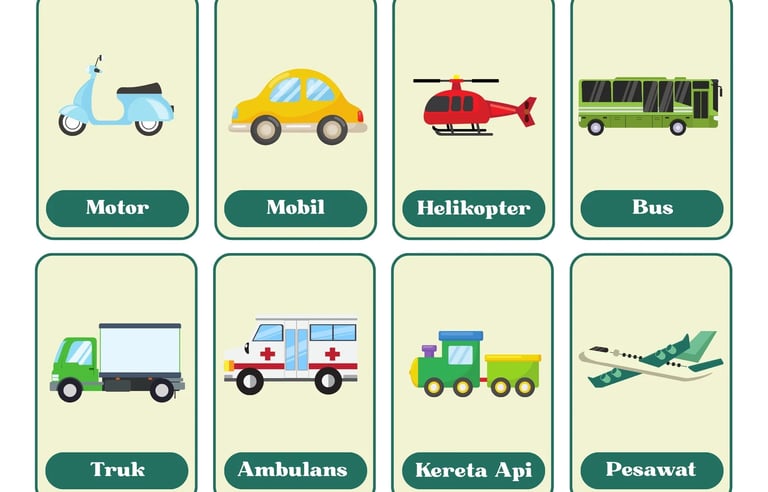
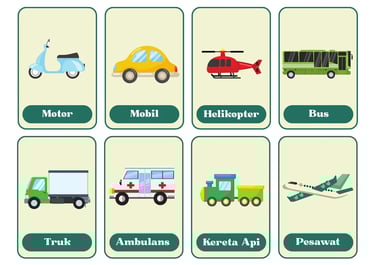
Car (Mobil): Standard taxi/ride-sharing service.
Motorcycle (Motor/Ojek): Significantly cheaper and faster to navigate traffic, but safety must be considered.
Payment: Primarily done via cash or app-based wallets (refer back to the Currency Guide).
B. Taxis and Local Transport
Taxis: Reputable companies like Blue Bird Group are reliable, metered, and widely available in large cities. Always insist the driver uses the meter.
Bemos/Angkot (Public Minibuses): Extremely cheap but difficult for tourists to navigate and often uncomfortably crowded. Not recommended for first-time European visitors.
Renting a Motorbike: Common in Bali and Lombok. Only recommended if you are an experienced rider, possess a valid international license, and have robust travel insurance.
4. Connectivity: SIM Cards and Mobile Data
Seamless connectivity is vital for safety, navigation, and using ride-hailing apps.
Local SIM Card (Highly Recommended): Buying a local SIM card upon arrival is the most cost-effective way to get mobile data.
Where to Buy: Telkomsel or XL Axiata kiosks at the airport, or authorized stores in the city. Telkomsel generally offers the best coverage in remote areas (crucial for NTT).
Wi-Fi: Available in all hotels, most cafes, and many restaurants, but speeds can be inconsistent compared to European standards.
The extensive reach of domestic flights and the convenience of Gojek/Grab mean that exploring vast Indonesia is easier than ever. TripTravelindo organizes all these logistics for you, ensuring smooth transitions between planes, trains, and boats.
➡️[Discover TripTravelindo's Fully-Managed Tour Packages, Including All Inter-Island Transport]
🧘Culture, Ethics, and Security
Indonesia is defined by its vibrant diversity—a rich tapestry of thousands of islands, languages, and belief systems. Showing respect for local customs is fundamental to a positive travel experience. This section guides our International clients on etiquette and safety across the archipelago.




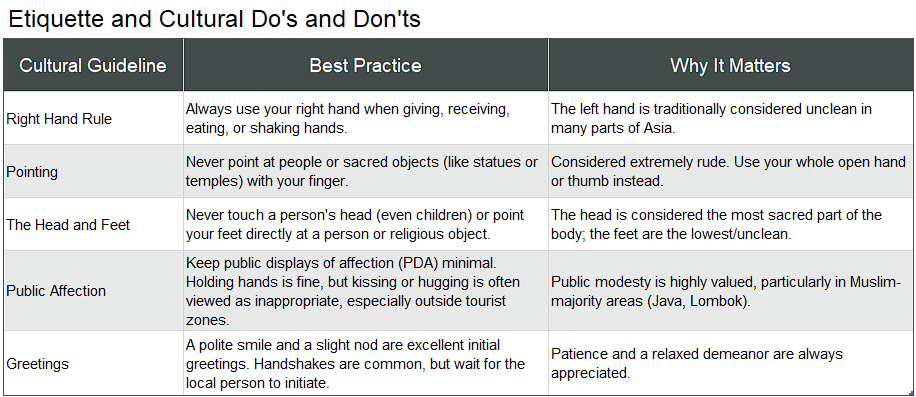
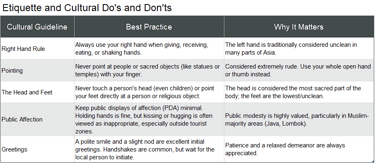
1. Etiquette and Cultural Do's and Don'ts
Understanding a few key cultural norms will ensure smooth interactions, especially in highly traditional areas like Bali and Central Java.
2. Respecting Sacred Sites and Dress Code
When visiting temples, mosques, or other religious sites (which you will do frequently in Bali and Java), a modest dress code is mandatory.
Covered Attire: Ensure your shoulders and knees are covered (for both men and women).
Sarong and Sash: In Balinese temples, you will be required to wear a sarong and a sash, which are often provided for rent at the entrance.
Remove Footwear: Always remove your shoes/sandals before entering a mosque, temple prayer area, or a local's home.
3. Basic Security and Personal Safety
While Indonesia is generally safe for tourists, common-sense precautions are necessary, especially in crowded urban centers.
Petty Crime: Be alert to pickpocketing and bag-snatching in busy areas (markets, crowded streets in Jakarta, Surabaya/Denpasar). Keep valuables secured and out of sight.
Motorbike Snatchers: When walking near busy roads, hold your bag/phone on the side away from traffic, as thieves on motorbikes may attempt to snatch items.
The "Scam" Risk: Be cautious of overly friendly strangers offering unsolicited help or very cheap deals, particularly around transportation hubs. Rely on trusted sources or your guide from TripTravelindo.
Drinks Spiking: Always watch your drink, particularly in busy nightspots. Never accept drinks from strangers.
4. Tipping and Bargaining Etiquette
A. Tipping
Tipping is generally not mandatory but is certainly appreciated for good service, especially by drivers, hotel staff, and tour guides (who rely on it).
Restaurants: A 5–10% service charge is usually added to the bill; tipping extra is optional.
Drivers/Guides: IDR 50,000 to IDR 100,000 per day is a generous and appreciated gesture for excellent service.
B. Bargaining
Appropriate Locations: Bargaining (haggling) is expected in traditional markets, local art stalls, and when dealing with informal transport (unmetered taxis, local boat operators).
Inappropriate Locations: Do not attempt to bargain in modern shopping malls, established restaurants, or government-regulated facilities (e.g., museum ticket counters).
How to Bargain: Start by offering about 30–50% of the initial asking price and meet somewhere in the middle. Always keep the exchange lighthearted and friendly.
By embracing the local customs with an open mind and applying standard travel safety practices, you are ready to immerse yourself in the rich heritage of Indonesia.
➡️[Explore TripTravelindo's Cultural Immersion Tour Packages in Java and Bali]
🗣️Key Language: Essential Indonesian Phrases You Should Know
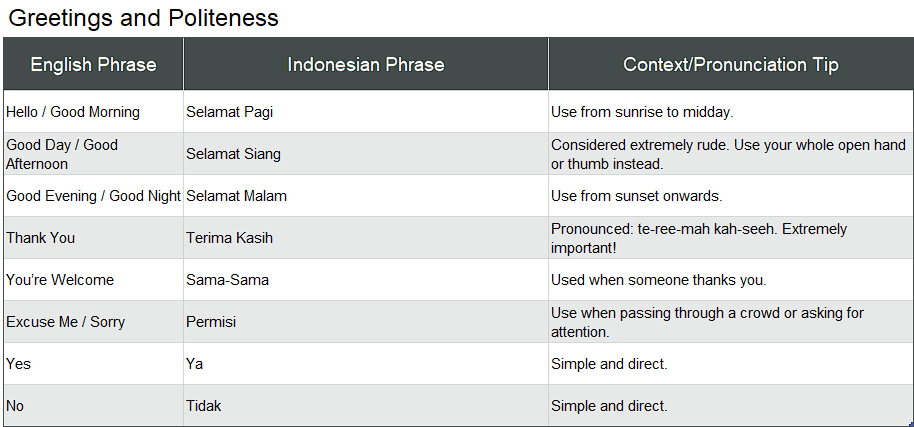
While English is widely understood in major tourist centers like Bali and Jakarta, making an effort to use a few basic Indonesian phrases (known locally as Bahasa Indonesia) is greatly appreciated by locals across Java, Lombok, and NTT. It shows respect and can enhance your interactions significantly.
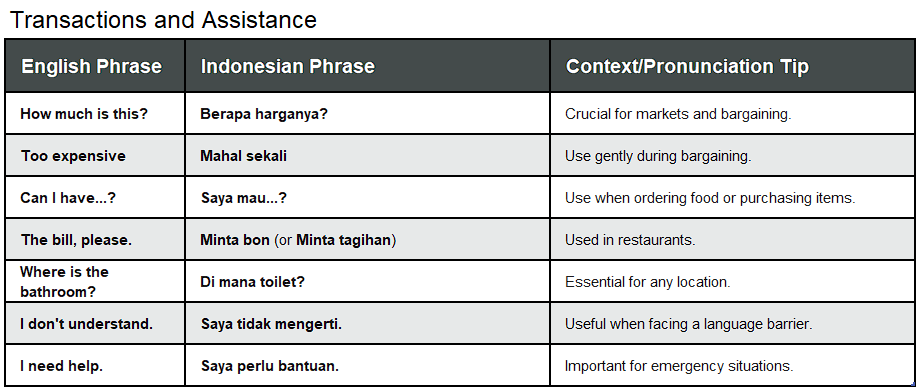
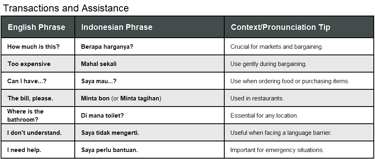
2. Transactions and Assistance
Essential phrases for dining, shopping, and asking for directions.
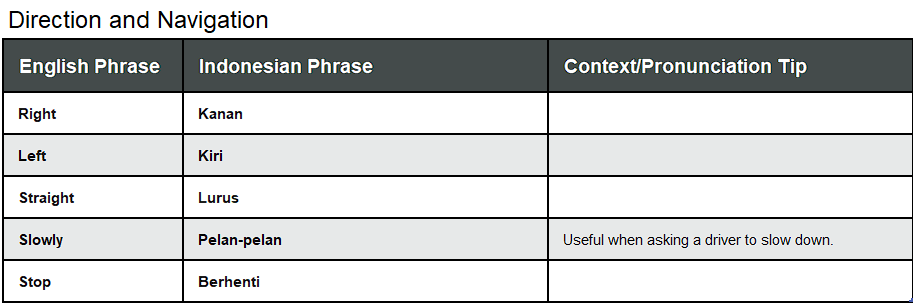
3. Direction and Navigation
Though mapping apps are key, knowing these simple words can help when talking to locals.
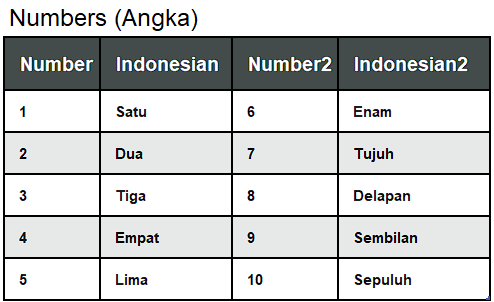
4. Numbers (Angka)
Knowing numbers 1 through 10 is very helpful for quick transactions.
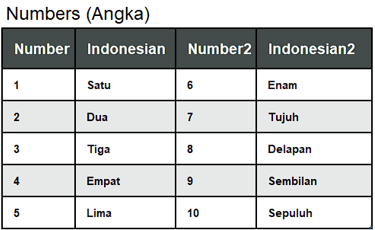
Even a simple "Selamat Pagi" or "Terima Kasih" will bring a warm smile and enhance your connection with the people of Indonesia.
➡️[See How TripTravelindo’s Expert Local Guides Can Assist You with Communication]
1. Greetings and Politeness
These phrases are your foundation for polite interaction throughout Indonesia.
1. The Cultural Heart and Epic Landscapes of Java
Java, the most populous island, is the cultural, historical, and economic center of Indonesia. It offers a powerful blend of ancient majesty and intense volcanic activity.
Yogyakarta (Jogja): The soul of Javanese culture, home to the UNESCO World Heritage sites of Borobudur Temple (the world’s largest Buddhist temple) and Prambanan Temple (a stunning Hindu complex). Ideal for history and culture enthusiasts.
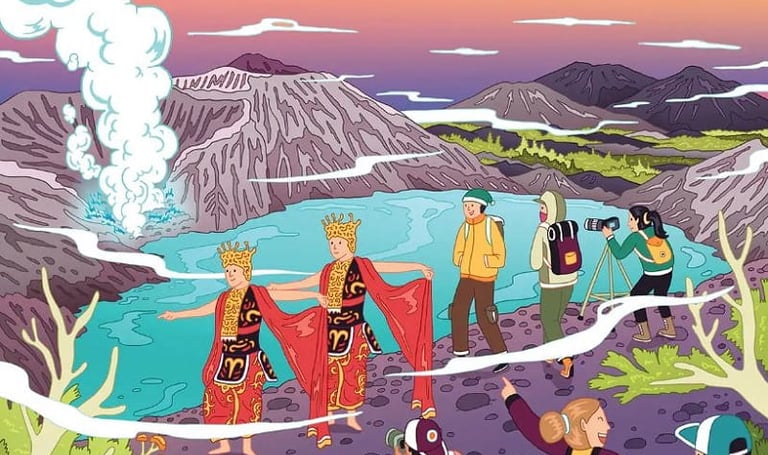
East Java Adventures: The dramatic volcanic region featuring the ethereal blue flames of Kawah Ijen and the breathtaking sunrise views over Mount Bromo. Perfect for adventurous trekkers.
Transport Tip: Java is best explored using its reliable executive-class train network to connect major cities.
Explore Java: Are you drawn to history, trekking, and urban culture? ➡️[View TripTravelindo’s Complete Java Tour Packages (Yogyakarta, Bromo, Ijen)]
2. Bali and Lombok: Tropical Bliss and Island Hopping
These neighboring islands offer the iconic Southeast Asian beach experience, yet each maintains a distinct personality.
Bali (The Island of Gods): Known globally for its vibrant Hindu culture, stunning rice terraces (Ubud), spiritual retreats, and world-class surfing beaches (Seminyak, Canggu). Bali offers luxury, relaxation, and cultural depth.
Lombok: Bali’s quieter, more rugged sister island. Lombok is famous for its stunning southern beaches, the massive Mount Rinjani volcano, and the tranquil Gili Islands (Gili Trawangan, Meno, and Air), which offer pristine snorkeling and a car-free, laid-back atmosphere.
Travel Tip: Transfers between Bali and Lombok (including the Gili Islands) are done efficiently via high-speed ferry or fast boat.
Explore Bali & Lombok: Ready for beaches, diving, and volcano trekking? ➡️[View TripTravelindo’s Curated Bali & Lombok Tour Packages (Including Gili Islands)]
3. Nusa Tenggara Timur (NTT): The Wild East and Natural Wonders
For the traveler seeking exotic landscapes, unique wildlife, and true island-hopping adventure, NTT—particularly the Flores and Komodo region—is unmatched.
Komodo National Park: Home to the prehistoric Komodo Dragon, pink beaches, and world-renowned diving and snorkeling sites. The primary way to explore is through a multi-day Live on Board (LOB) boat trip starting from Labuan Bajo.
Sumba and Flores: Destinations offering authentic cultural villages, stunning savannah landscapes, and unique geological sites like the multi-colored crater lakes of Kelimutu.
Logistics Tip: Travel here often involves domestic flights to Labuan Bajo, followed by boat transfers and rugged land travel.
Explore NTT: Are you ready for an adventurous trip to see unique wildlife and unspoiled nature? ➡️[View TripTravelindo’s Adventure Packages in Nusa Tenggara Timur (Labuan Bajo, Komodo, Flores)]
Ready to Start Your Journey?
Choosing TripTravelindo means selecting a partner dedicated to safety, authentic experiences, and seamless logistics. We integrate all the preparation, safety, and transport details covered in this guide directly into our packages, allowing you to simply arrive and enjoy your journey.
Contact our experts today to design your bespoke Indonesian adventure.

🌏Primary Tourism Zones
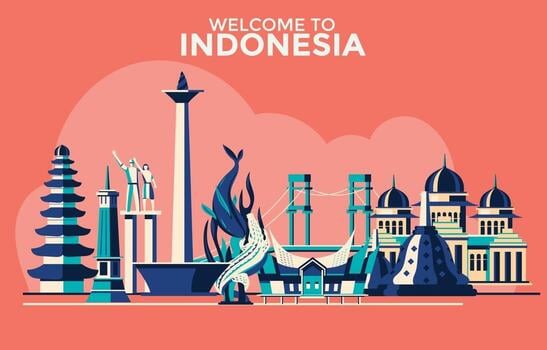
Indonesia is too vast and varied for a single trip. The key to a memorable holiday is selecting the region that best matches your travel style. Here, we outline the primary zones covered by TripTravelindo and provide direct links to our curated packages.
💸Budget Planning and Tour Packages
After covering all the essential logistics—from visas and safety to transportation and culture—the final step in preparing for your Indonesian trip is establishing a realistic budget. This section helps you understand typical costs and shows how TripTravelindo can simplify your planning with all-inclusive packages.



1. Estimating Your Daily Budget
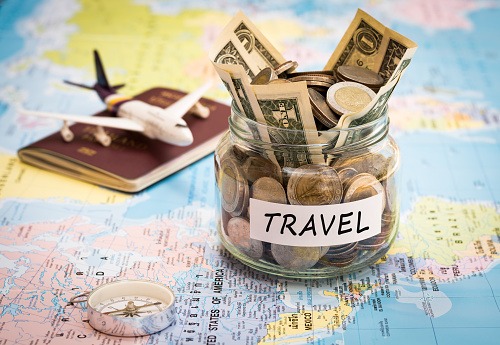
Indonesia is generally affordable for European travelers, but costs can fluctuate significantly based on your travel style (backpacking vs. luxury) and the destinations you choose (Bali is generally more expensive than Java).
Here is a general daily expense breakdown (excluding long-haul flights and major tour package costs):
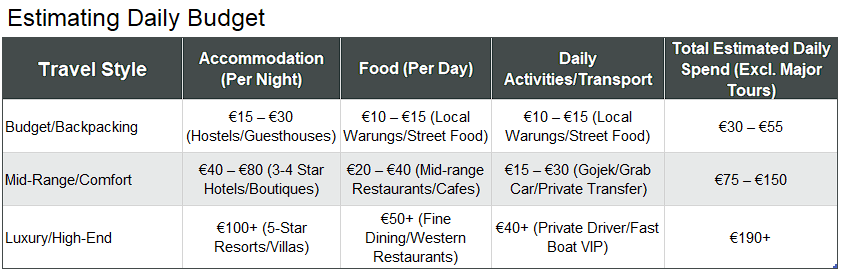
Note on Cash: Always budget for entrance fees to temples, national parks, and small market purchases, as these transactions usually require cash (Rupiah).
2. Why Choose a Local Tour Operator?
While DIY travel offers flexibility, using a trusted local operator like TripTravelindo provides unparalleled value, especially when coordinating complex logistics across multiple islands (Java, Bali, Lombok, NTT).
Key Advantages of Booking with Us:
Logistical Expertise: We manage all complex transfers, domestic flights, boat bookings, and inter-city transport across Java's rail network.
Safety and Reliability: You benefit from vetted, professional drivers and guides, minimizing risks associated with finding transport and ensuring secure transactions.
Time-Saving: Skip the hours of planning and booking individual components. Your itinerary is seamless from start to finish, maximizing your time for exploration.
Local Access: Our guides offer insights and access to unique experiences that independent travelers might miss.
3. Ready to Transform Your Trip Planning?
At TripTravelindo, we design our packages to be comprehensive and transparent, covering transportation, accommodation, guiding fees, and core entrance tickets. This allows you to lock in a large portion of your budget upfront and only worry about daily spending and souvenirs.
By booking a tour, you trade complex planning for peace of mind, knowing your adventure across Indonesia’s best islands is fully managed by experts.
🌟 Begin Your Hassle-Free Adventure Today! 🌟
Don't let logistics limit your dreams. We have the perfect tour package ready, whether you seek cultural immersion in Java, beach relaxation in Bali, or remote trekking in NTT.
➡️[Explore All TripTravelindo’s Exclusive All-Inclusive Tour Packages Here]


Book Your Tour
Reserve your unforgettable Indonesia adventure with Good Plan Travel today. Easy, fast, secure.
Follow us to explore Indonesia with expert travel guidance
©PT.Sinar Pesona Travelindo 2025. All rights reserved.