



Highland Papua Province
A Comprehensive Look at Highland Papua Province
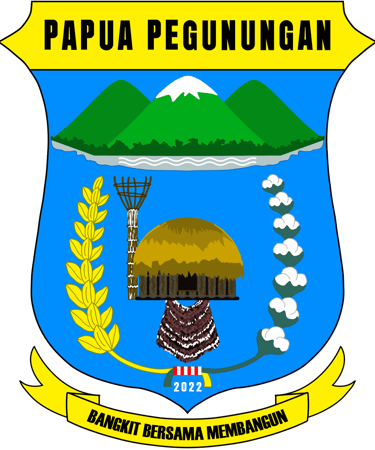
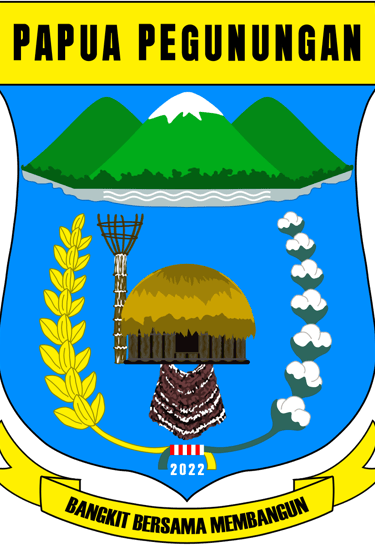
🏔️Highland Papua Province: Heart of the Baliem Valley and Jayawijaya Mountains
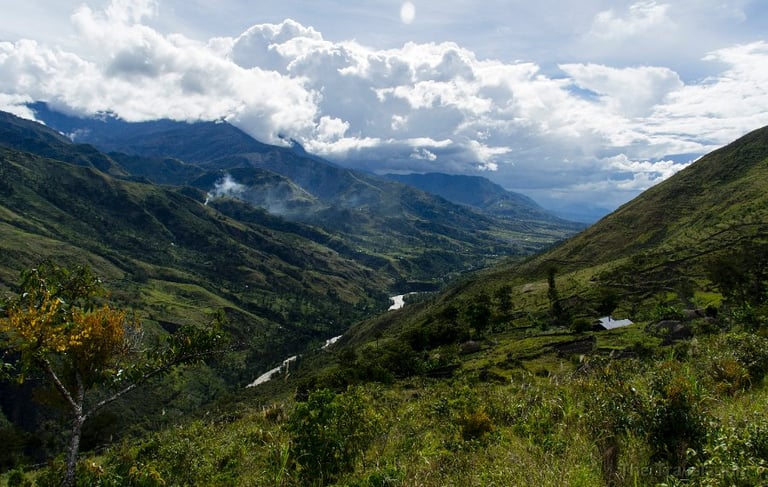
Highland Papua is Indonesia's only landlocked province, with its entire territory dominated by the extensive Jayawijaya Mountain Range (Central Highlands) that stretches from east to west. This province is the cultural heartland of Papua, home to the famous indigenous tribes residing in the remote Baliem Valley. The provisional capital is Wamena.
🏛️Capital City and Geographical Conditions
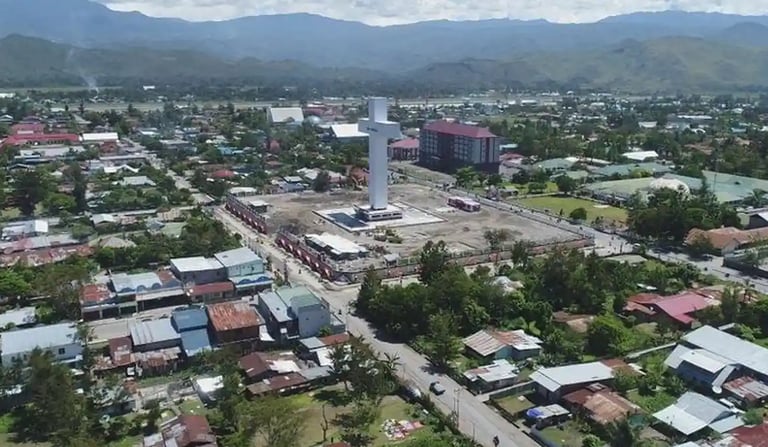
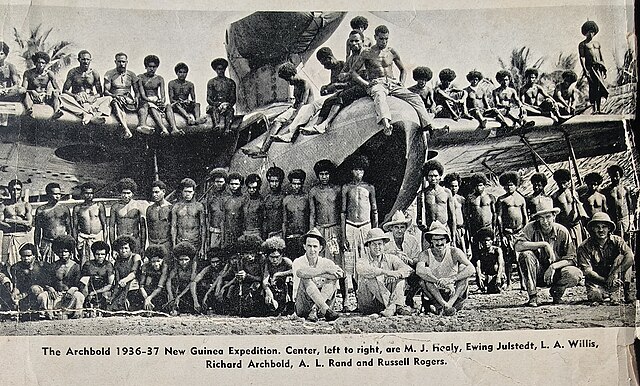
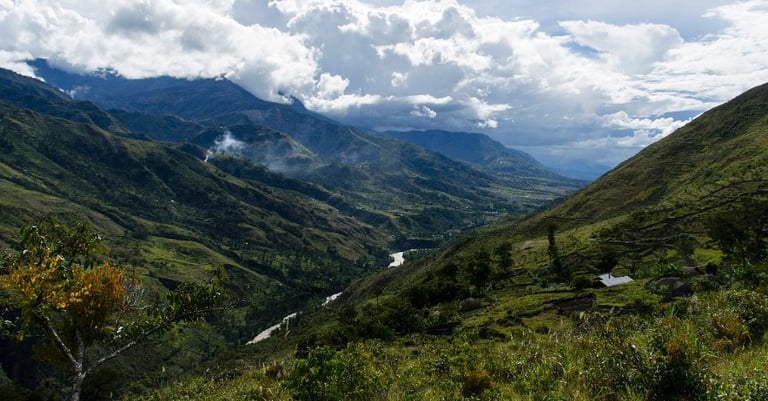
Provisional Capital: Wamena. The main town in the province is located in the heart of the vast Baliem Valley, one of the world's most famous secluded valleys, systematically discovered by American exploration in 1938.
Geographical Conditions: The entire provincial area is located in the high-altitude highlands.
Jayawijaya Mountains: The region includes the main part of the Central Highlands, featuring peaks that were historically snow-capped (such as Puncak Trikora and Puncak Mandala).
Baliem Valley: The large, fertile valley is located at an altitude of approximately 1,600 meters (5,250 feet) above sea level. This valley is the center of sweet potato farming and the settlement area for the Dani Tribe.
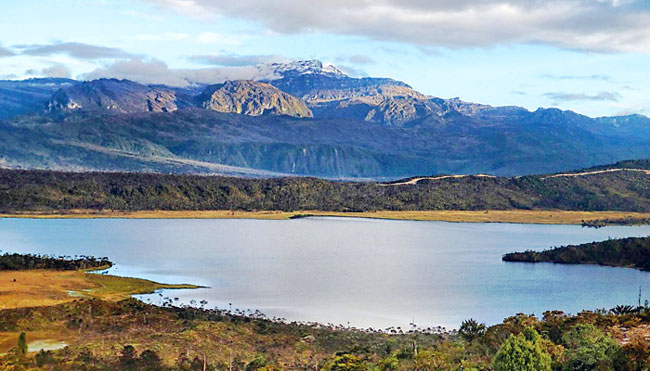
Highland Lakes: The province features scenic freshwater lakes at high altitudes, such as Lake Habbema, showcasing the unique beauty of the tropical mountain environment.
Climate: Subtropical mountainous climate that is generally cool, with temperatures dropping sharply at night, differing from the tropical lowland climates of other Papuan provinces.
👥Demographics and Customs
Population: The population is dominated by indigenous ethnic groups of the Central Highlands who maintain strong traditional practices.
Ethnic Groups:
Dani: The most famous tribe in the Baliem Valley, focusing on sweet potato farming and pig husbandry.
Lani (or Western Dani): Residing in the western part of the Baliem Valley.
Yali: A tribe living in the eastern regions, known for their unique tall houses built on steep terrain.
Nduga: Inhabiting the southern slopes of the mountains.
Customs (Adat Istiadat):
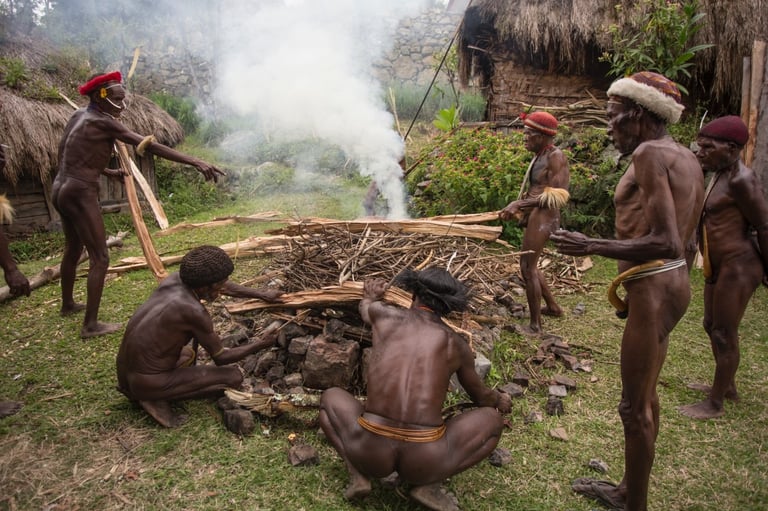
Bakar Batu (Stone Cooking Ceremony): This is the most central ritual in the highlands, where pork and sweet potatoes are cooked in a pit lined with stones that have been heated until glowing hot. This is not just a cooking method but a major ceremony signifying peace, welcoming guests, weddings, and funerals.
Significance of Pigs: Pigs are a form of currency, a symbol of status, and the main indicator of wealth. Pigs are only slaughtered for major traditional ceremonies.
Mumi (Mummies): A rare and revered tradition of preserving the bodies of important tribal leaders through smoking, which can be found in some villages in the Baliem Valley.
📜History: Contact and Development Issues
The history of Highland Papua largely centers around the Baliem Valley.
Discovery: The Baliem Valley was first "discovered" by an air expedition led by Richard Archbold in 1938, revealing a large farming population previously unknown to the outside world.
Missionary and Government Contact: Intensive contact began in the latter half of the 20th century with the arrival of religious missions and government presence, gradually introducing modern technology and clothing.
Provincial Division: Highland Papua was officially established in 2022 by partitioning the former Papua province, with the main goal of accelerating infrastructure development and public services in this historically isolated mountain region.
🎨Culture and Traditional Arts
The culture in Highland Papua is strongly tied to the natural environment and the necessity of subsistence in the high altitudes.
Sweet Potato Agriculture: The entire social, economic, and seasonal calendar of the Dani tribe is centered around the cultivation and harvesting of sweet potatoes.
Traditional Tools: The use of Kapak Batu (stone axes) as the main tool for clearing land and for ceremonial purposes.
Tribal Warfare: Although now relatively peaceful, the tradition of tribal warfare and related rituals (such as the use of spears, bows, and arrows) is still revered as part of their history and identity.
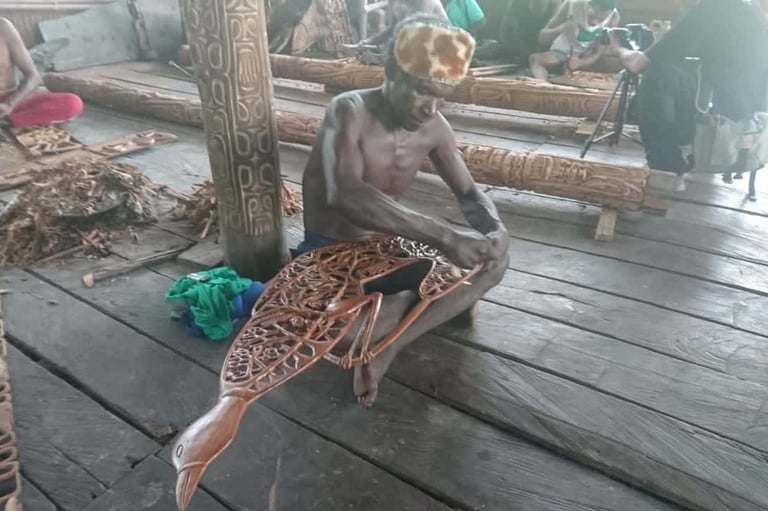
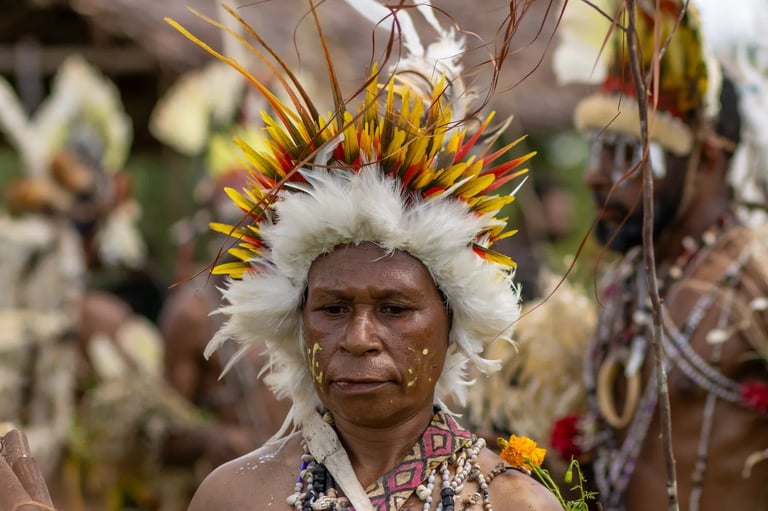
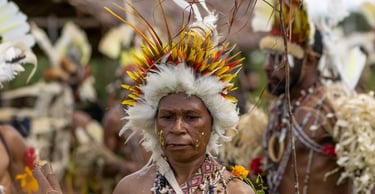
Traditional Houses and Clothing of Highland Papua Province (Papua Pegunungan)
The traditional architecture and clothing are cleverly adapted to suit the cold temperatures of the highlands.
🏠Traditional House : Honai
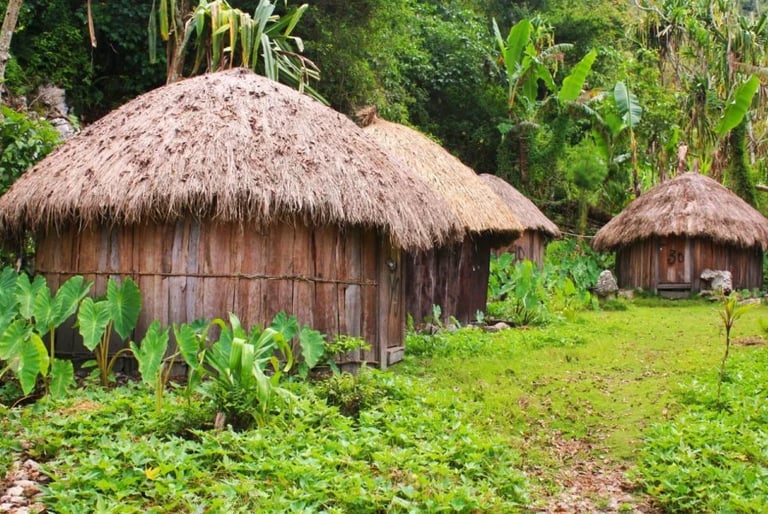
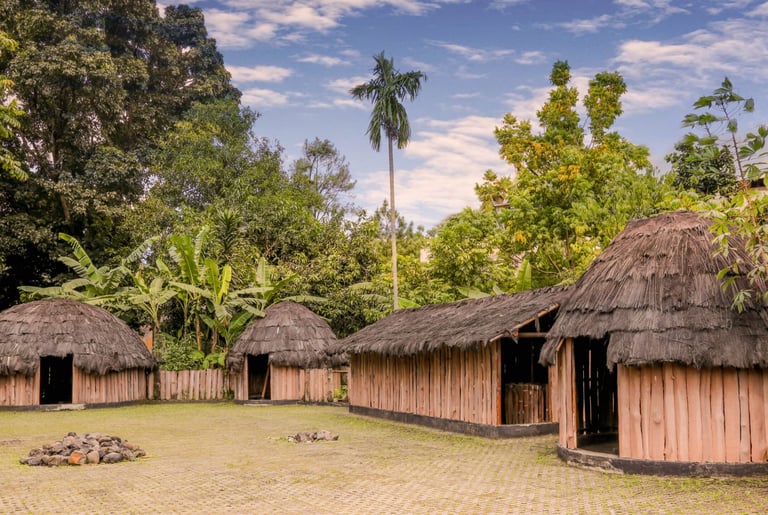
Honai (Dani/Lani Tribe House)
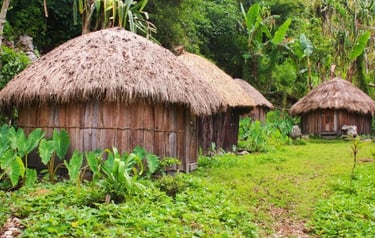
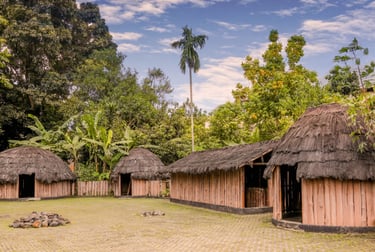
Architecture and Function: The Honai is the signature traditional house of Highland Papua. It is circular with thick, low walls and a heavy conical thatched roof that almost reaches the ground. The structure has no windows and only a single, low door.
Climate Adaptation: This design is highly functional, maximizing heat retention from the indoor fire pit, making it warm against the cold high-altitude temperatures.
Division: There is a Honai Laki-laki (for men's sleeping and customary discussions), Ebe’ai (women and children's house), and Wamai (pig/kitchen house).
👘Traditional Clothing : Koteka and Sali/Yokam
Highland traditional attire is minimalist, emphasizing ornaments and functionality.
Men's Attire (Baju Adat Laki-laki)
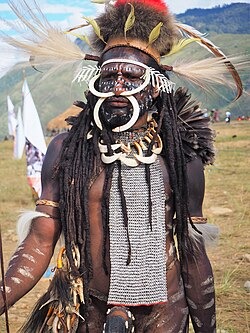
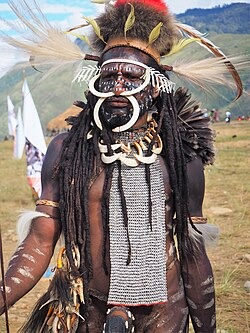
Koteka Men traditionally wear only the Koteka (penis gourd, made from dried water gourd).
Accessories: Men decorate their chests and heads with necklaces of shells and pigtails, and large ceremonial headdresses made of Cassowary or Bird of Paradise feathers.
Women's Attire (Baju Adat Perempuan)
Sali/Yokam Women wear a short, layered skirt made of woven straw or bark fiber called Sali or Yokam, covering the waist.
Noken: They carry the Noken (a knotted string bag woven from tree bark fiber) on their heads or backs to transport produce, small pigs, or babies.
🍲Distinctive Traditional Cuisine
The cuisine reflects the harsh climate and reliance on specific cultivated crops and river resources.
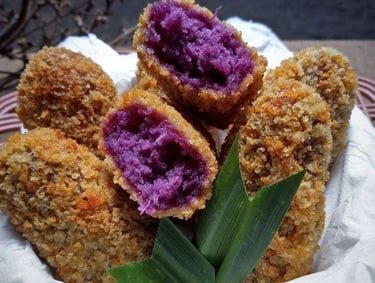
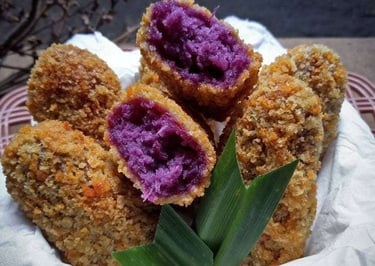
Ubi (Sweet Potato): The absolute staple food of the highlands (Dani/Lani), cooked in large quantities, often roasted or boiled, and consumed during the Bakar Batu ceremony.
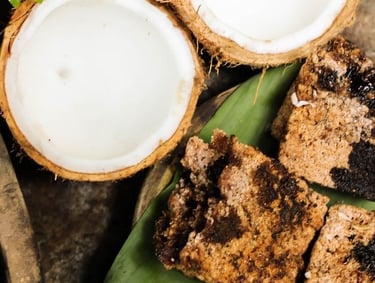
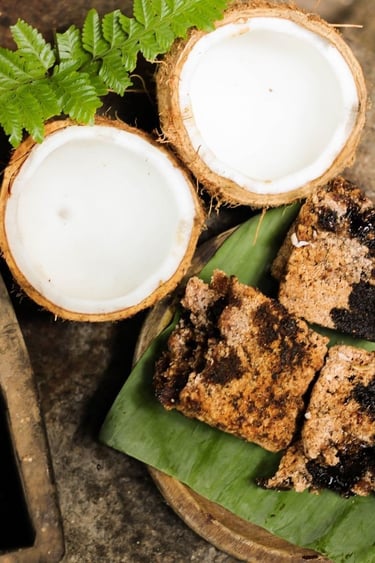
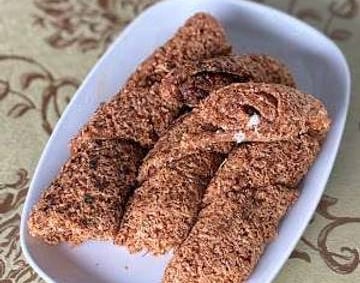
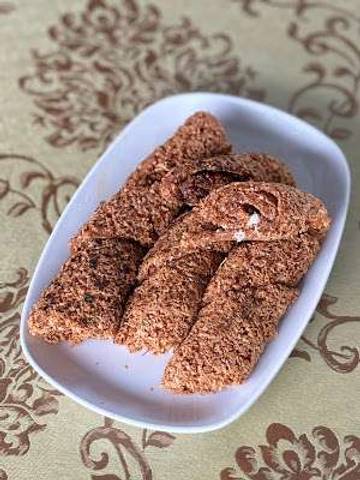
Sago and Sagu Bakar: Sago remains the main carbohydrate source in the southern swampy regions (Asmat/Mimika).
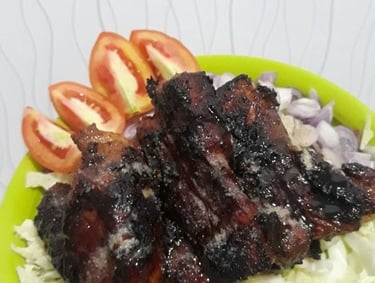
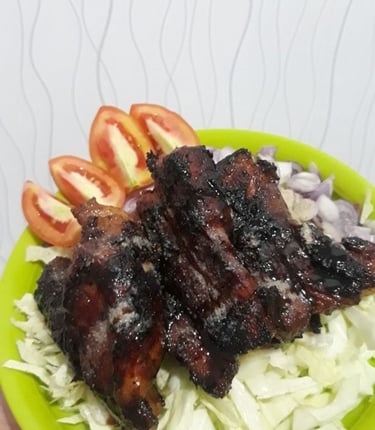
Babi Bakar (Roasted Pork): Pork is the most important ceremonial food in the highlands, central to the Bakar Batu ceremony.
🗺️Famous Tourist Attractions
Baliem Valley (Wamena): The main destination offering a unique opportunity to witness the traditional life of the Dani Tribe, the Honai houses, and the Bakar Batu rituals.
Baliem Valley Festival: A highly popular annual festival showcasing mock tribal warfare, dances, and major customary ceremonies.
Lake Habbema: A stunning, high-altitude lake located on the old trekking route to Puncak Trikora, offering spectacular mountain scenery.
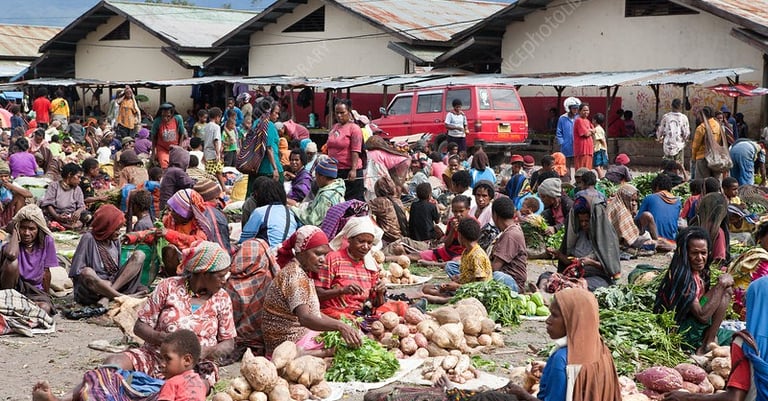
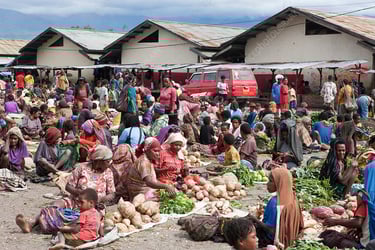
Wamena Market: A bustling traditional market where tribespeople exchange sweet potatoes, traditional crafts, and sometimes even live piglets.


✈️Transportation Infrastructure
Transportation is extremely reliant on air access.
Airport (Bandar Udara):
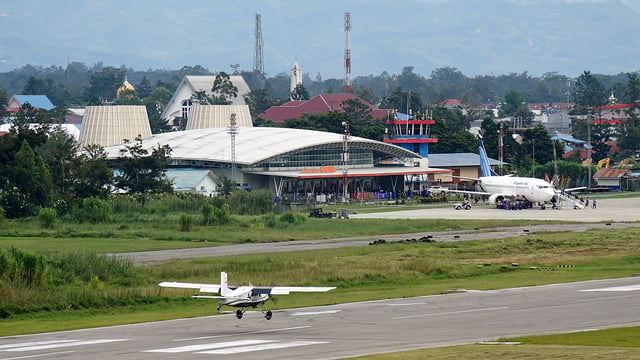
Wamena Airport (WMX): The lifeline of the province. WMX handles both cargo and passenger flights from Jayapura, Timika, and other cities, and serves as the base for pioneer (small) flights to more remote districts.
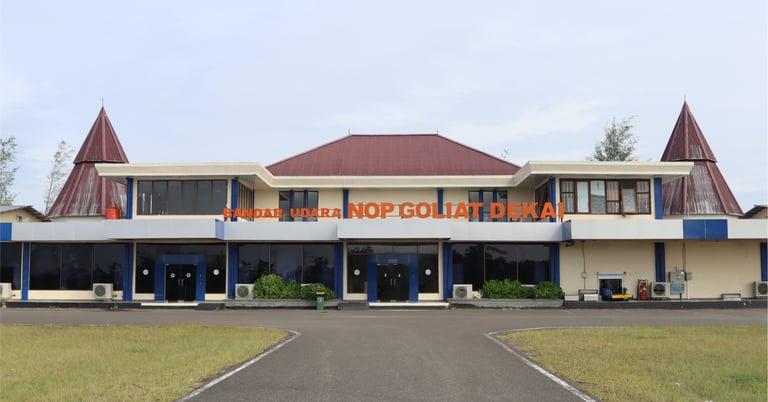
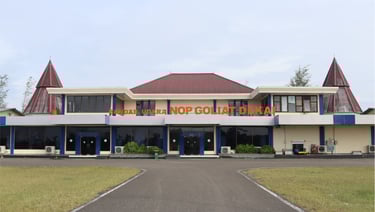
Nop Goliat Airport (Dekai): Serves the Yahukimo region.
Port (Pelabuhan):
Highland Papua is a landlocked province. Therefore, it does not have any seapaports. All goods and logistics must be transported either overland or by air from ports in neighboring provinces (primarily Jayapura or Timika).
Railroad (Stasiun Kereta Api):
Highland Papua Province does not have a functional public railway network. Travel between districts relies on the limited road network and small, pioneer air transport.

Highland Papua is the cultural heartland of New Guinea, a region that fiercely protects its ancestral traditions amidst challenging isolation. It is a land where ancient rituals thrive in the cool embrace of the mountains, inviting visitors to experience the raw, powerful beauty of the Baliem Valley.
Follow us to explore Indonesia with expert travel guidance
©PT.Sinar Pesona Travelindo 2025. All rights reserved.